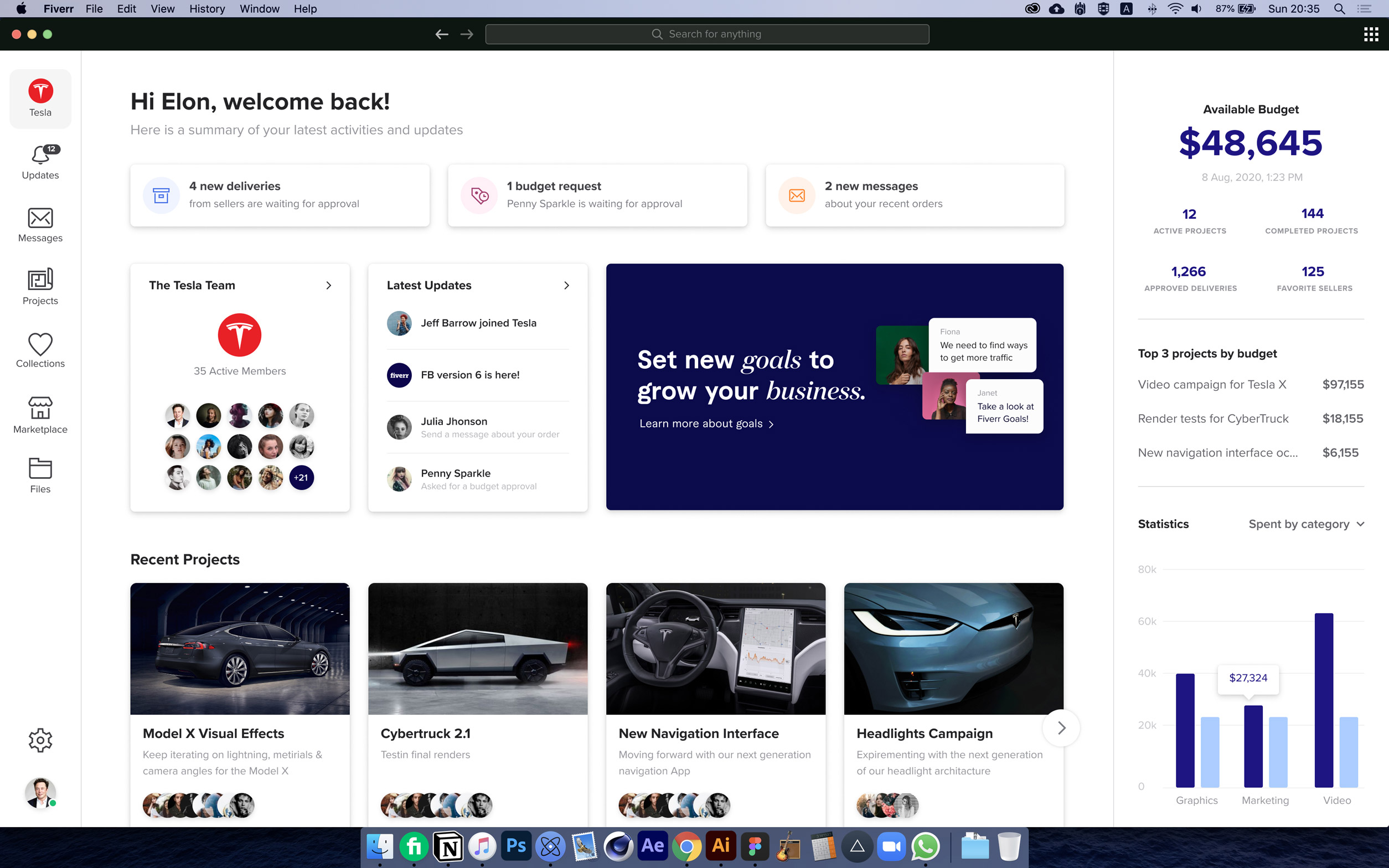
Overview & Context
Fiverr started as a $5 marketplace — fast, transactional, and lightweight. Over time it grew into a platform where businesses were spending real budgets on complex, multi-part projects. But the product was still essentially a website you navigated to in a browser tab, and the experience hadn’t caught up with how these business users actually worked.
There was a clear opportunity: a segment of Fiverr’s audience — small businesses, teams, solopreneurs running operations — who needed something closer to a business tool than a marketplace. Not a different website, but a dedicated space that acknowledged they were running projects, managing budgets, and coordinating across multiple people.
The Concept
The idea was a native desktop app for businesses: always present on the desktop, available without opening a browser, hunting for a bookmark, or navigating back to a tab. Something that sat alongside the tools businesses already ran their work in.
The design direction was a hybrid: part Fiverr, part project management platform — somewhere between the marketplace and tools like Monday or Trello. The goal was to make managing freelance work feel like managing any other kind of work, with Fiverr’s seller network as the resource layer underneath.
How It Worked
The core design challenge was that Fiverr’s model is granular in a way business users don’t naturally think in — a company wants “a video ad,” but Fiverr delivers that as a scriptwriter, a motion designer, a sound designer, and an editor, each sourced separately. The app had to bridge that gap: let people think in projects while Fiverr’s marketplace worked underneath.
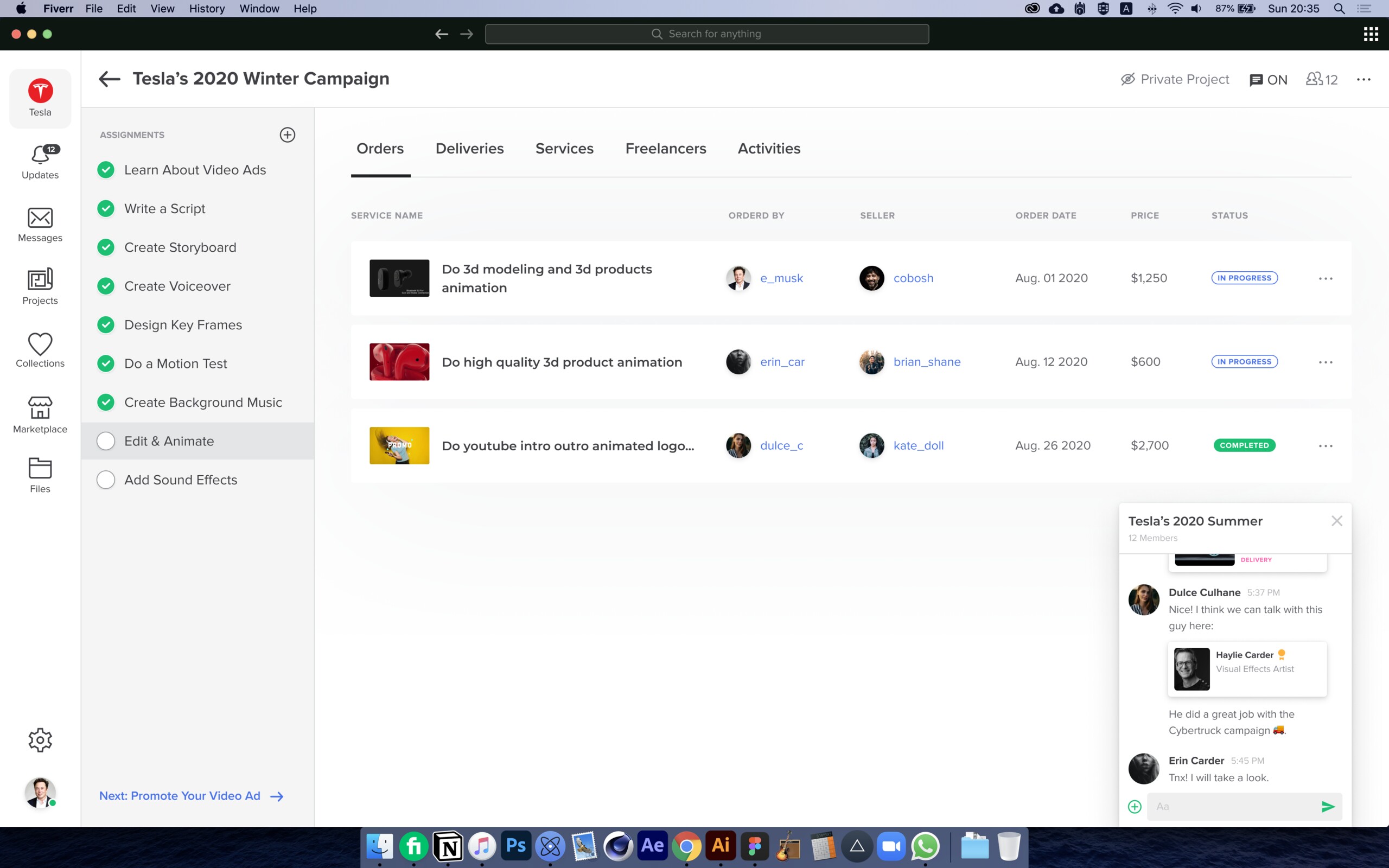
The core unit was the project. You’d create a project, give it a name and a budget, and assign team members — both people from inside your company and Fiverr sellers you brought in for specific work.
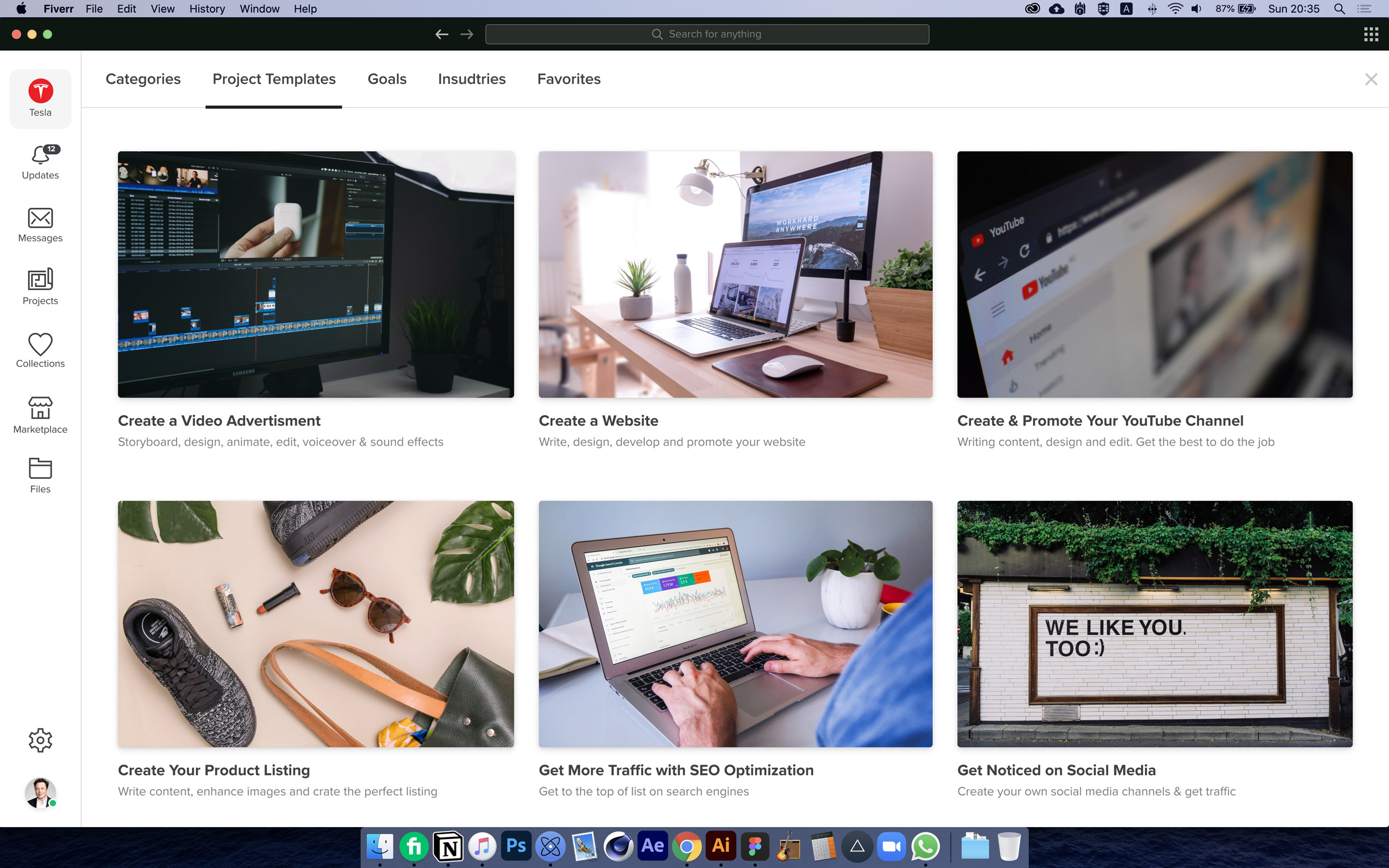
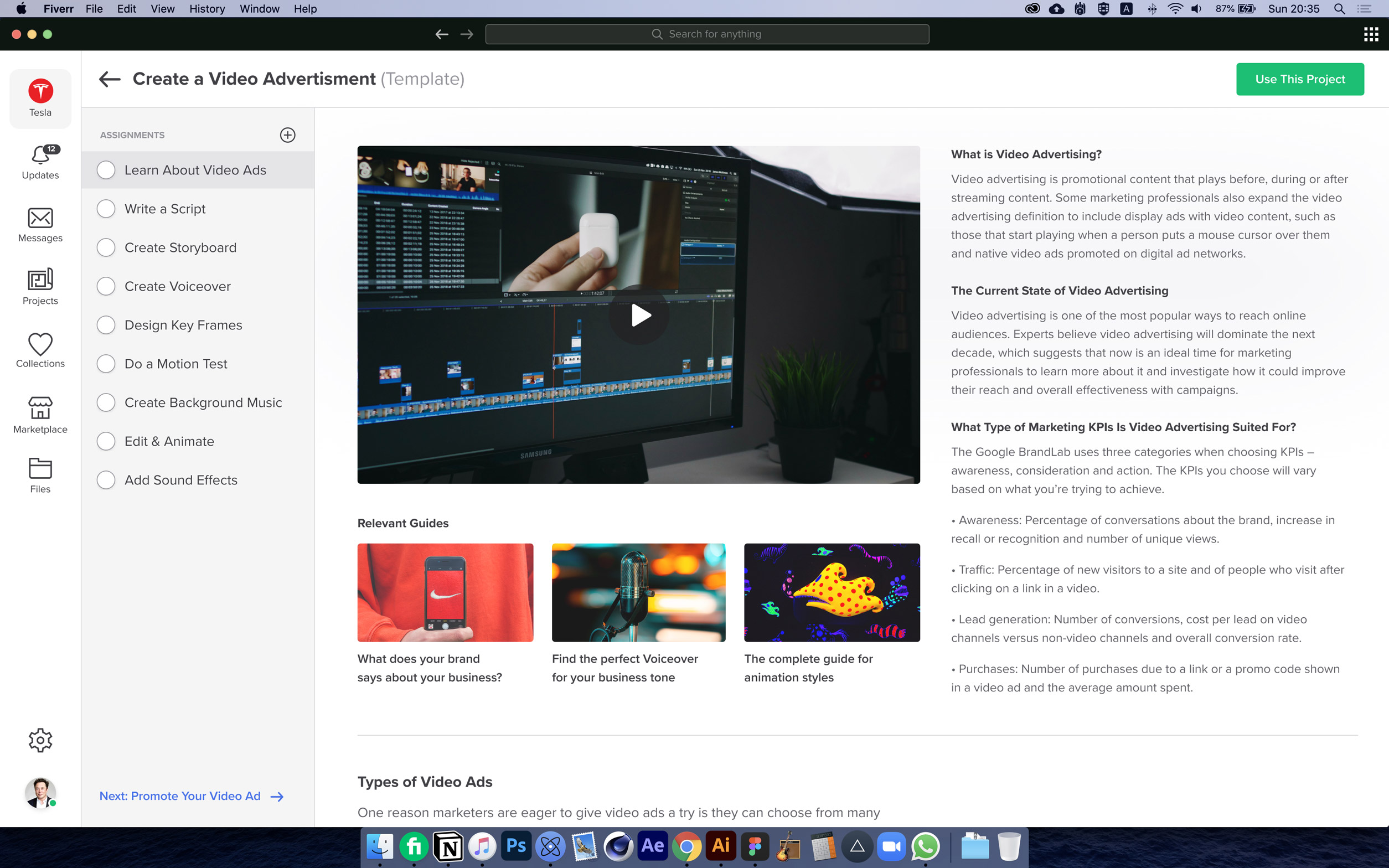
To make that easier, the app included project templates for common workflows: producing a video advertisement, building a website, launching a campaign. Each template came pre-loaded with the steps typically needed, along with guidance on which services to source from Fiverr — so users understood what a project would require before they started sourcing.
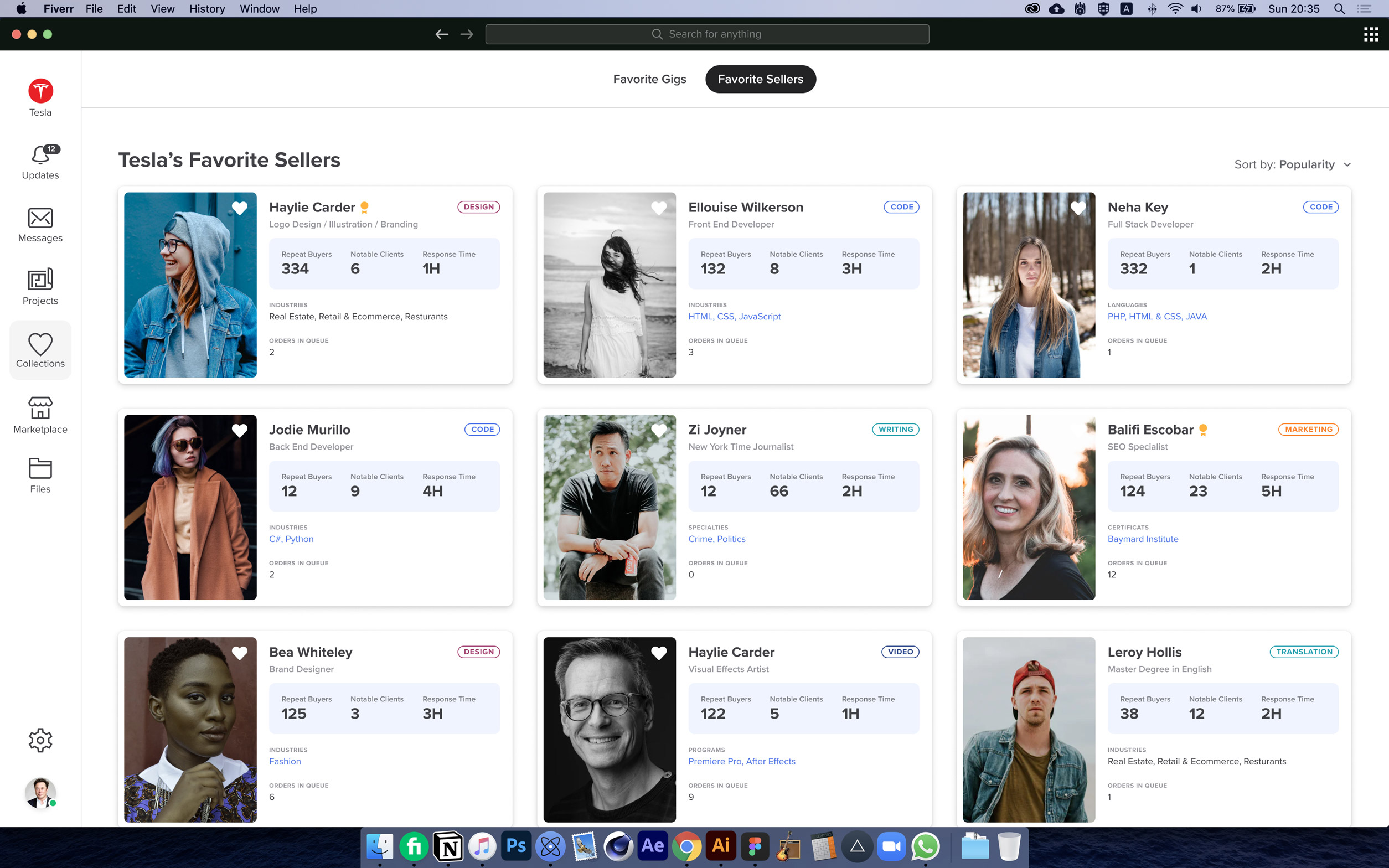
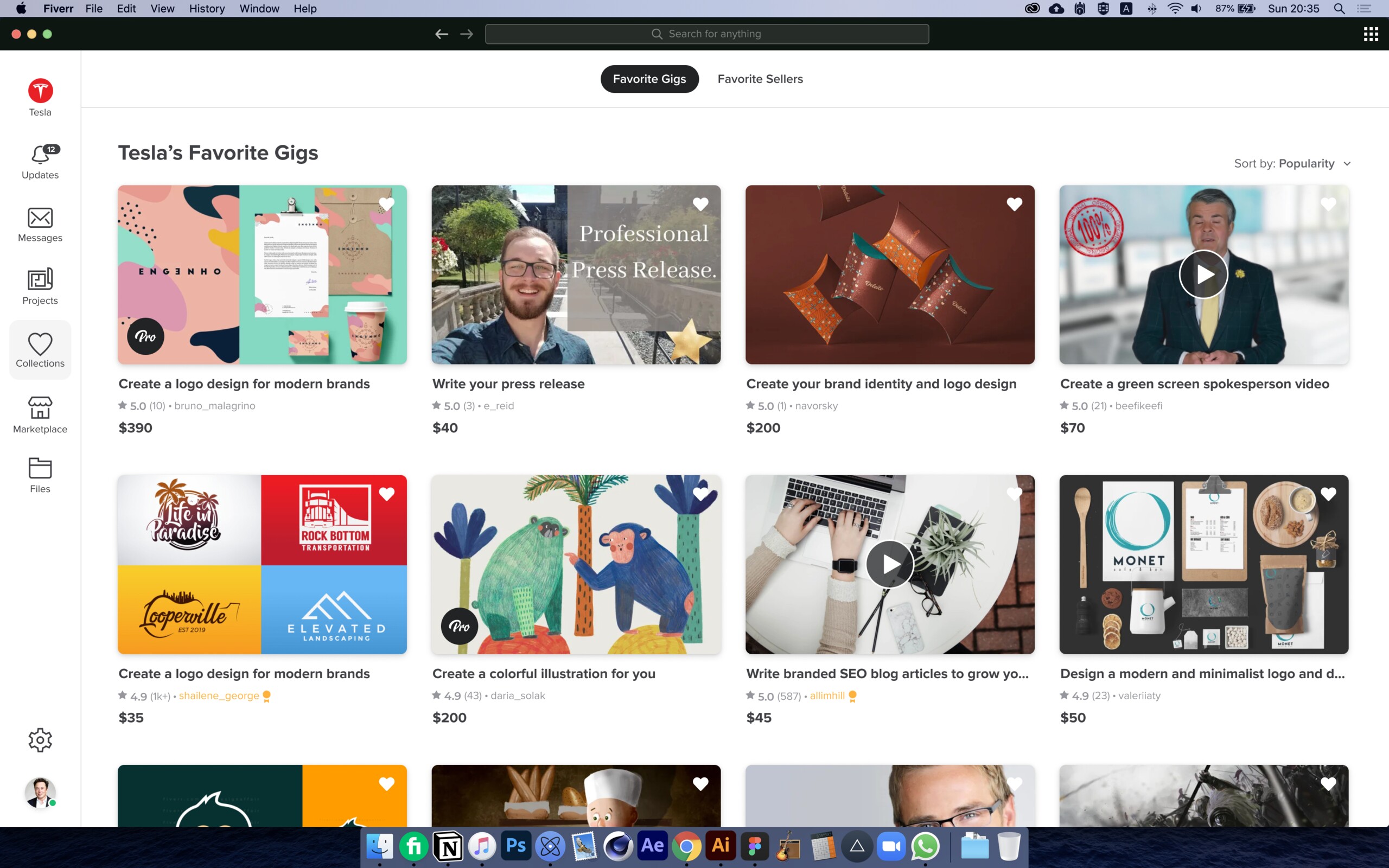
The freelancer discovery experience was built into the project flow — so rather than jumping out to Fiverr search and copying links back, you could browse and add sellers directly within the project context.
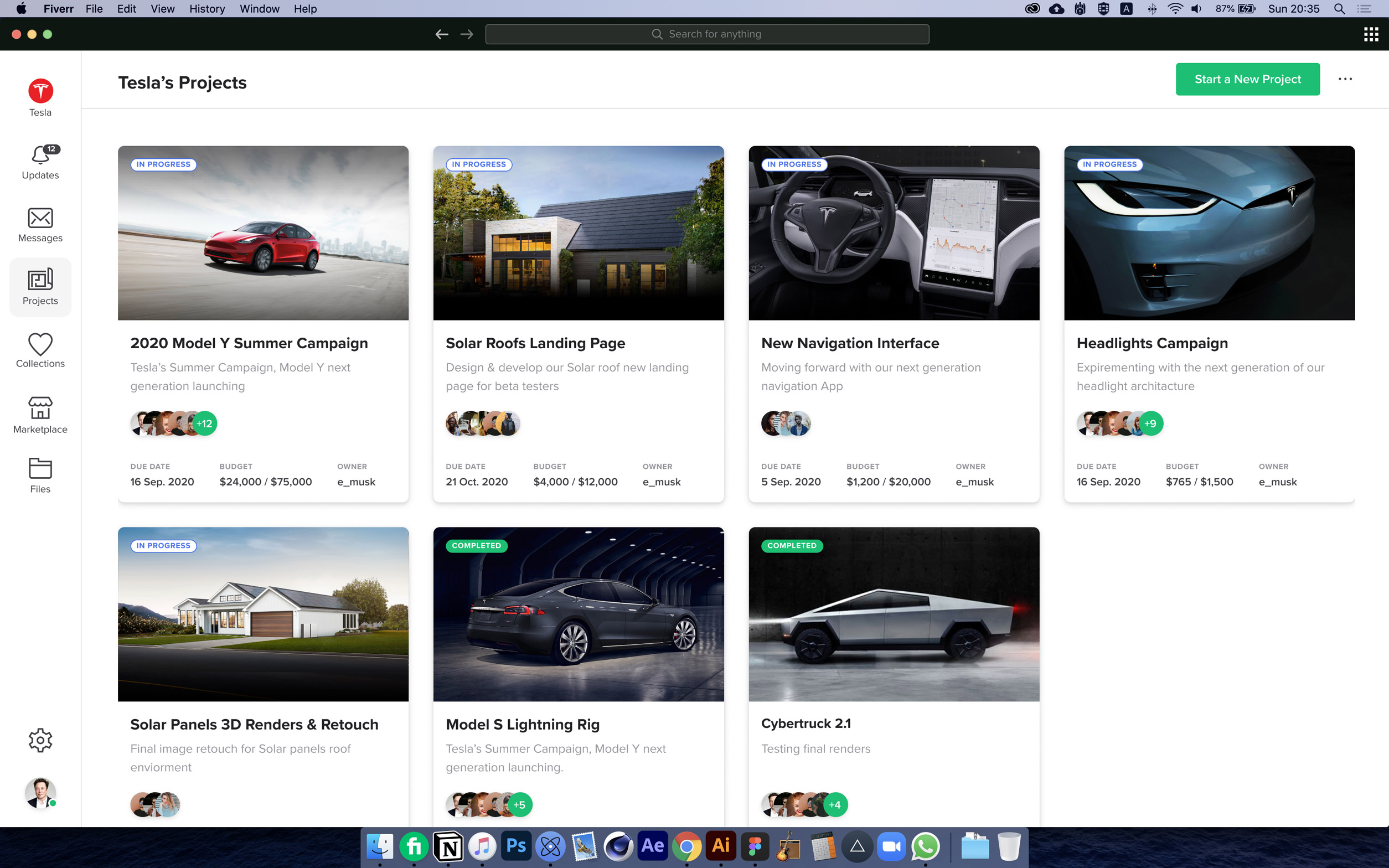
Team management let you see the full picture in one place — internal team members and Fiverr sellers side by side, each with their role in the project.
The app also included budget and spend tracking, a project chat so all communication stayed in context, and an order details view so you could see the status of every active engagement at a glance.
Outcome
This was a vision project — a concept for where Fiverr’s business product could go, not a shipped feature. It never made it to production. But it was a useful exercise in thinking about what a Fiverr experience built specifically for teams would look like if it started from how businesses actually work, rather than from the marketplace’s existing model.
It was one of a few explorations into where Fiverr’s model could go next — alongside The Freelancer, which took a similar rethink to the seller experience.