Freelance Marketplace
The Freelancer
An alternative way for freelancers to offer services.
Overview & Context
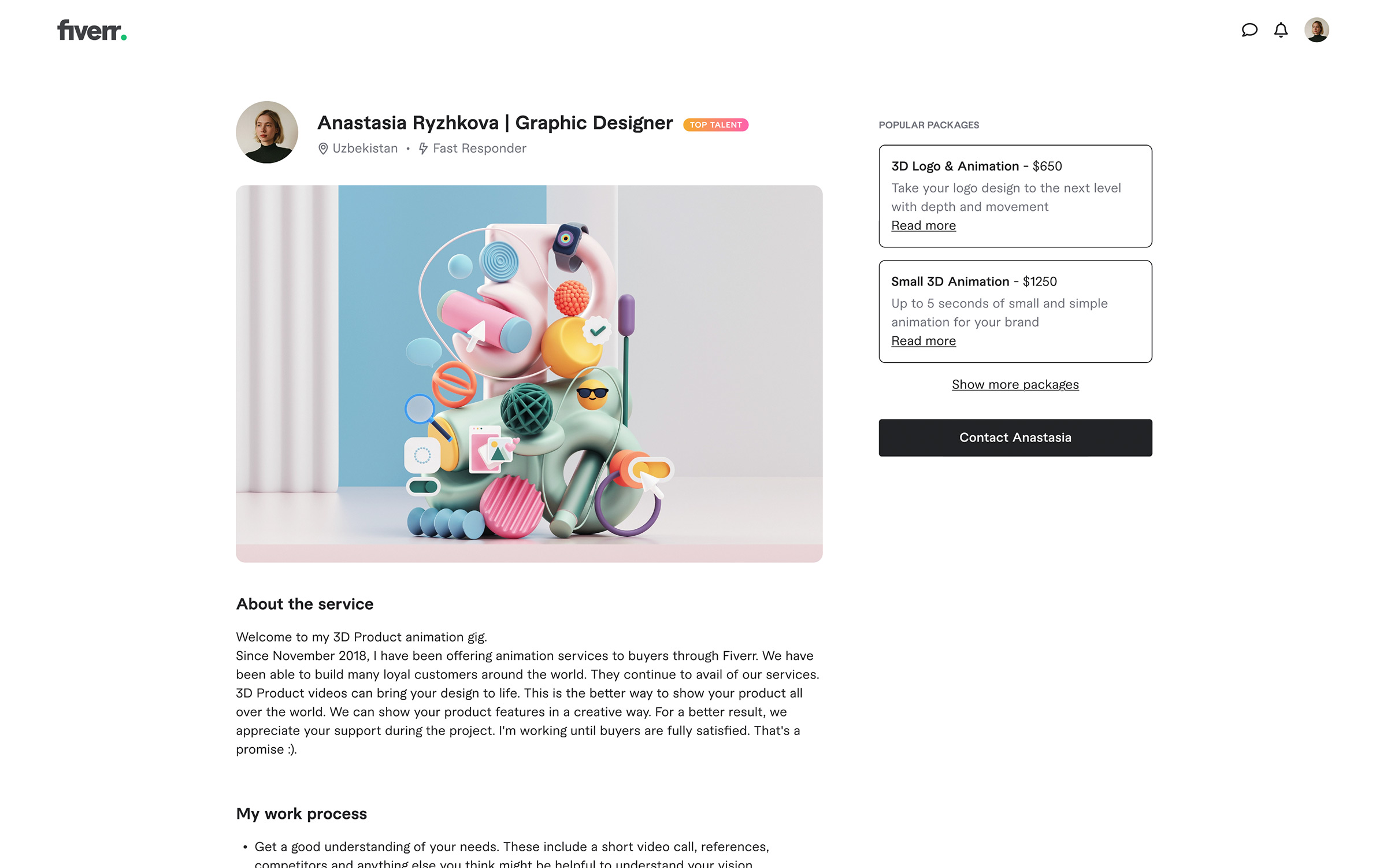
Fiverr’s marketplace is built around gigs: discrete, highly specific services that a seller creates and lists individually. If you’re a graphic designer, you don’t create a listing that says “I’m a graphic designer.” You create separate listings — one for logo design, one for photo restoration, one for photo manipulation — each with its own pricing tiers (basic, standard, premium), its own deliverables, file formats, revision count, turnaround time, and Q&A.
The model works well for buyers: they see exactly what they’re getting and what it costs. But for sellers it creates a real problem. A skilled graphic designer might be capable of twenty or thirty or forty different things. Nobody creates forty gigs. It’s too much to set up and too much to maintain. So most sellers create a handful of their most marketable gigs, and the rest of what they can do simply isn’t visible on the platform.
The result is a systematic underrepresentation of seller capability — and a missed opportunity for buyers who can’t find what they need.
The Idea
The concept was to decouple the seller’s profile from the gig creation process. Instead of building out full service listings, a seller would simply:
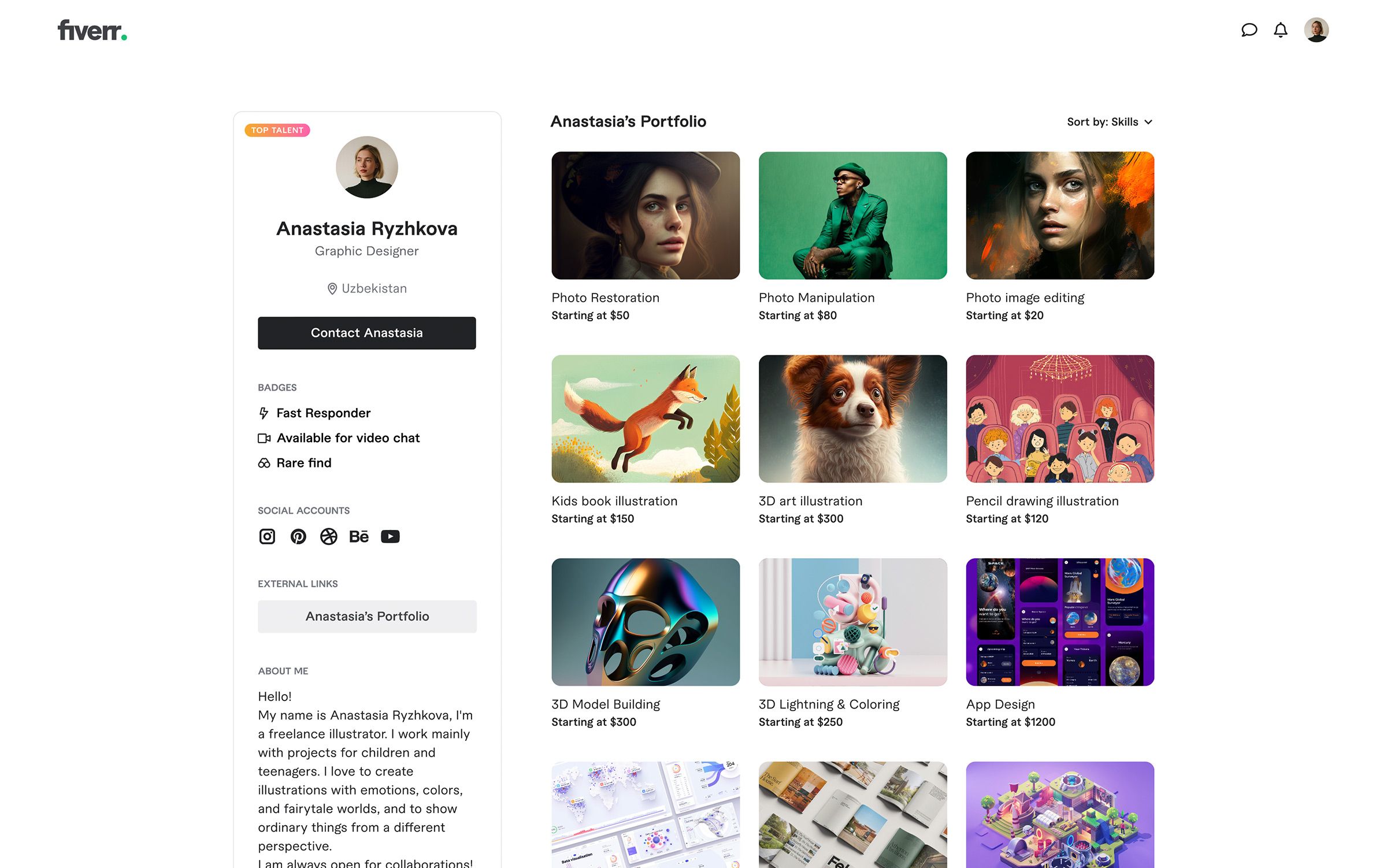
- Add skills and samples — show what they can do through examples of their work (photo restoration, 3D model building, illustration, video editing, etc.) with minimal setup
- Set a rate — a single hourly rate that the seller keeps private
- Let Fiverr price it — for any given skill, Fiverr calculates the likely cost based on how long that type of work typically takes, multiplied by the seller’s rate. The buyer sees a starting price; the seller’s rate stays behind the scenes.
If a piece of work takes ten hours and the seller charges sixty dollars an hour, the buyer sees a six hundred dollar starting price — without either side having to negotiate that from scratch. For more complex or unusual briefs, the custom offer flow (already familiar to both sides) handles the edge cases.
The Setup Flow
The seller onboarding is designed to be quick and progressive — you start broad and add detail over time.
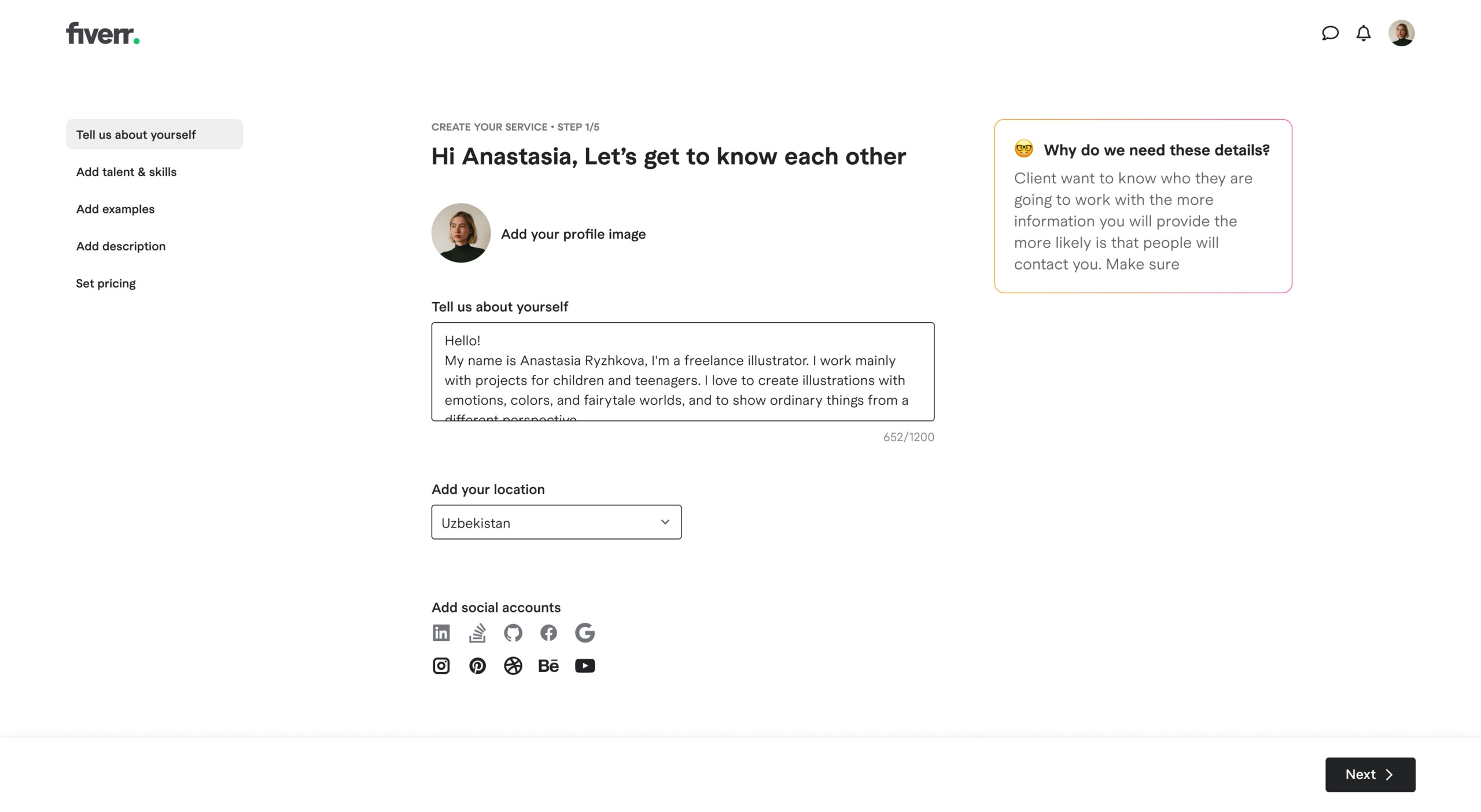
Step 1 — Introduce yourself. Basic profile info: who you are, where you’re from, a short bio about how you work. Work process matters here — buyers want to understand what it’s like to work with someone, not just see their output.
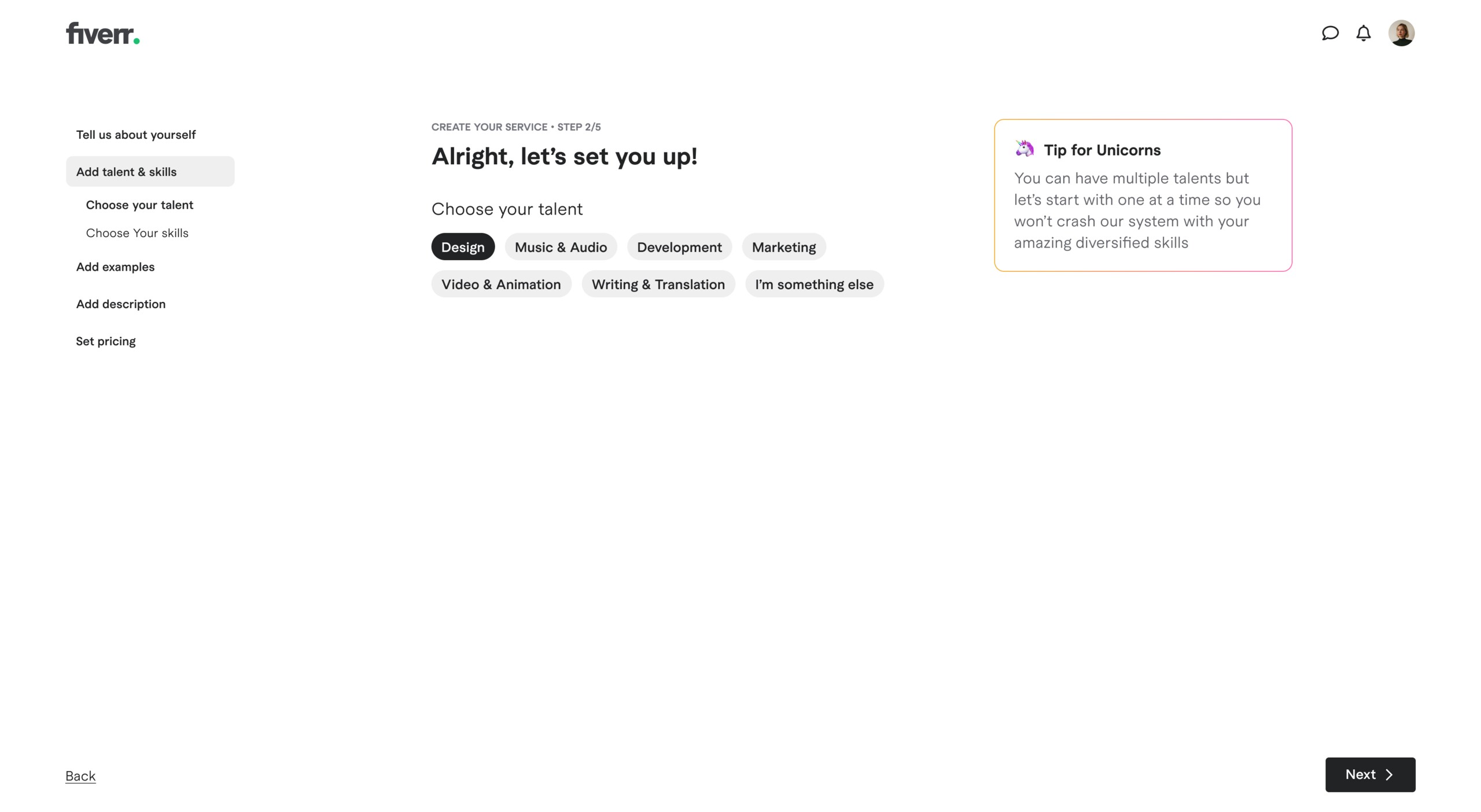
Step 2 — Choose a talent area. Fiverr’s existing categories (Design, Music & Audio, Development, Marketing, etc.) structure the first choice. You pick one to start with — you can add more later, but the idea is to anchor yourself somewhere first.
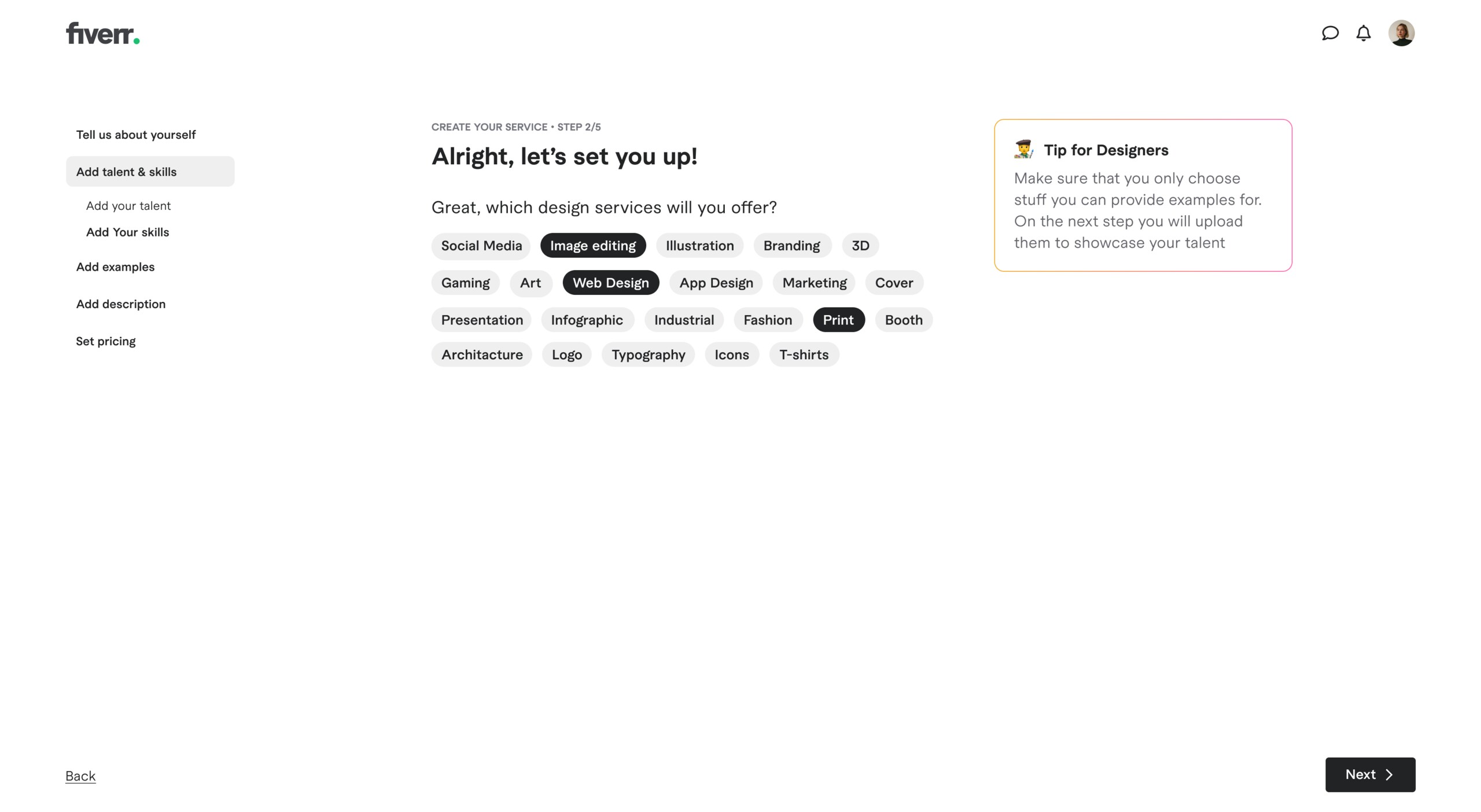
Step 3 — Select specific skills. Within your chosen area, you pick the specific things you do — illustration, branding, photo editing, 3D modeling, whatever applies. These become the building blocks of your profile.
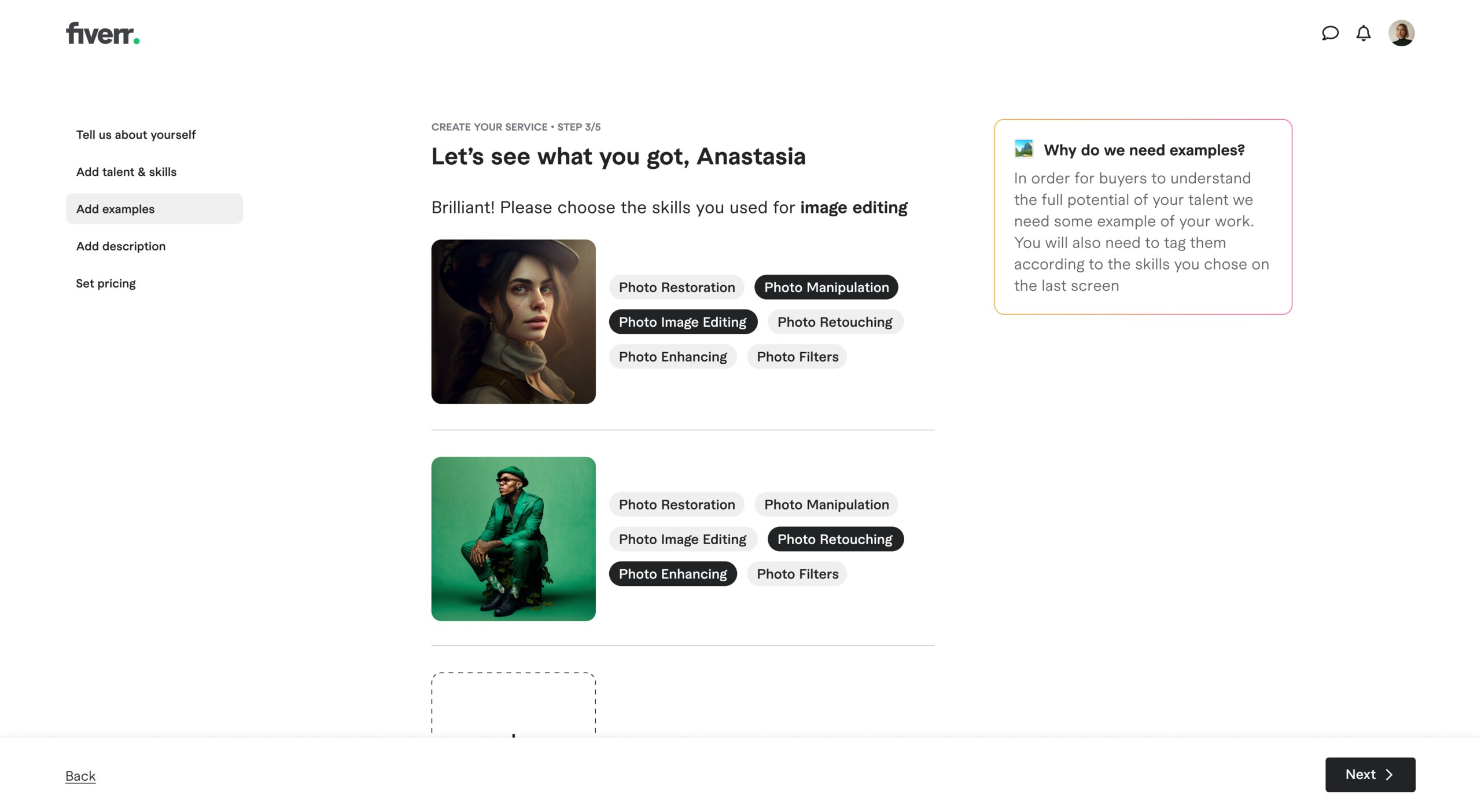
Step 4 — Upload work samples. For each skill, you upload examples and tag them — “photo manipulation,” “image editing,” and so on. These aren’t gig thumbnails; they’re portfolio evidence, contextualised by the skill they demonstrate.
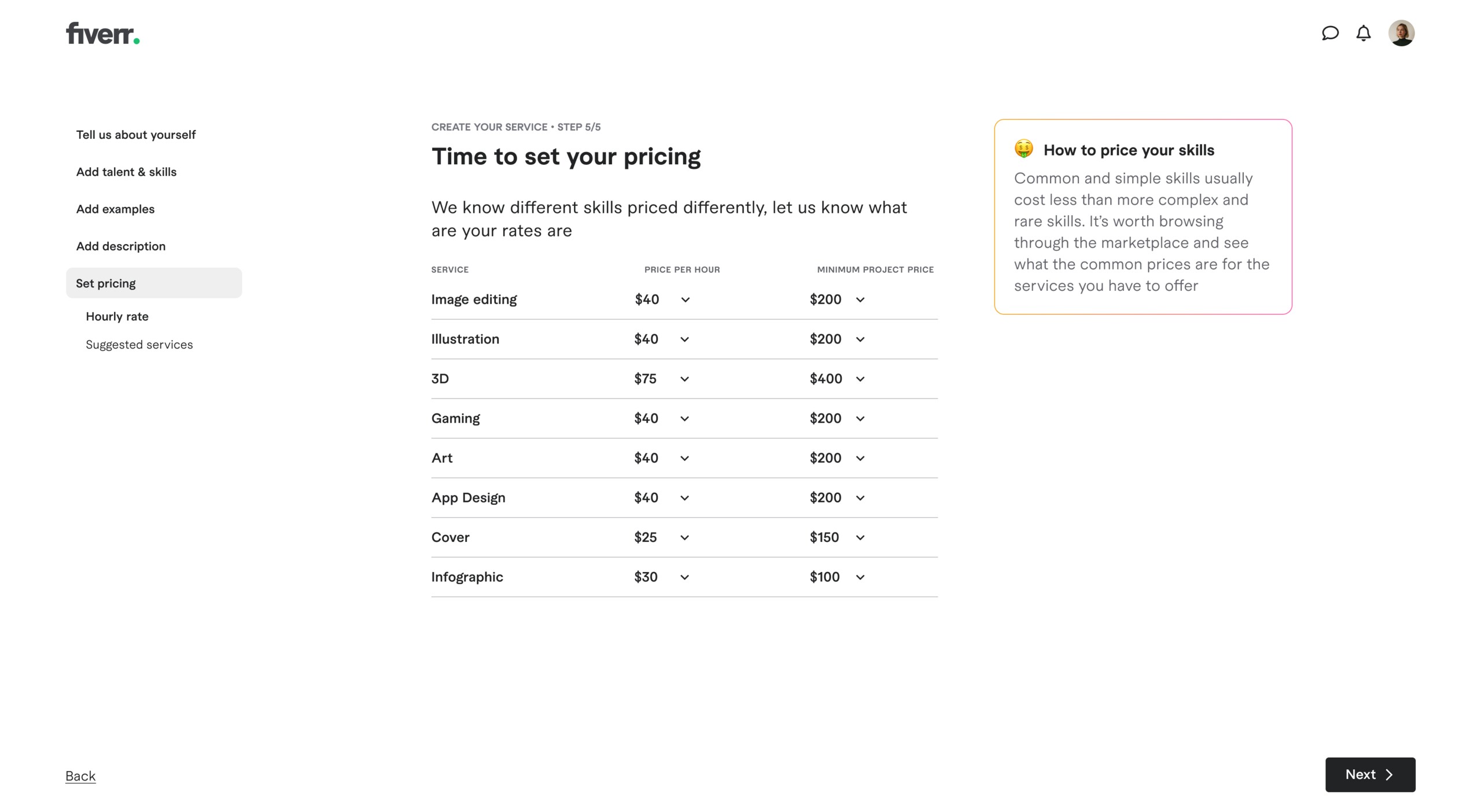
Step 5 — Set your pricing. Rather than pricing individual services, you set a rate per skill — how much you charge per hour, and a minimum project price. You can price skills differently: image editing might be $40/hour while 3D modeling is $75/hour, reflecting the real difference in complexity and market rate.
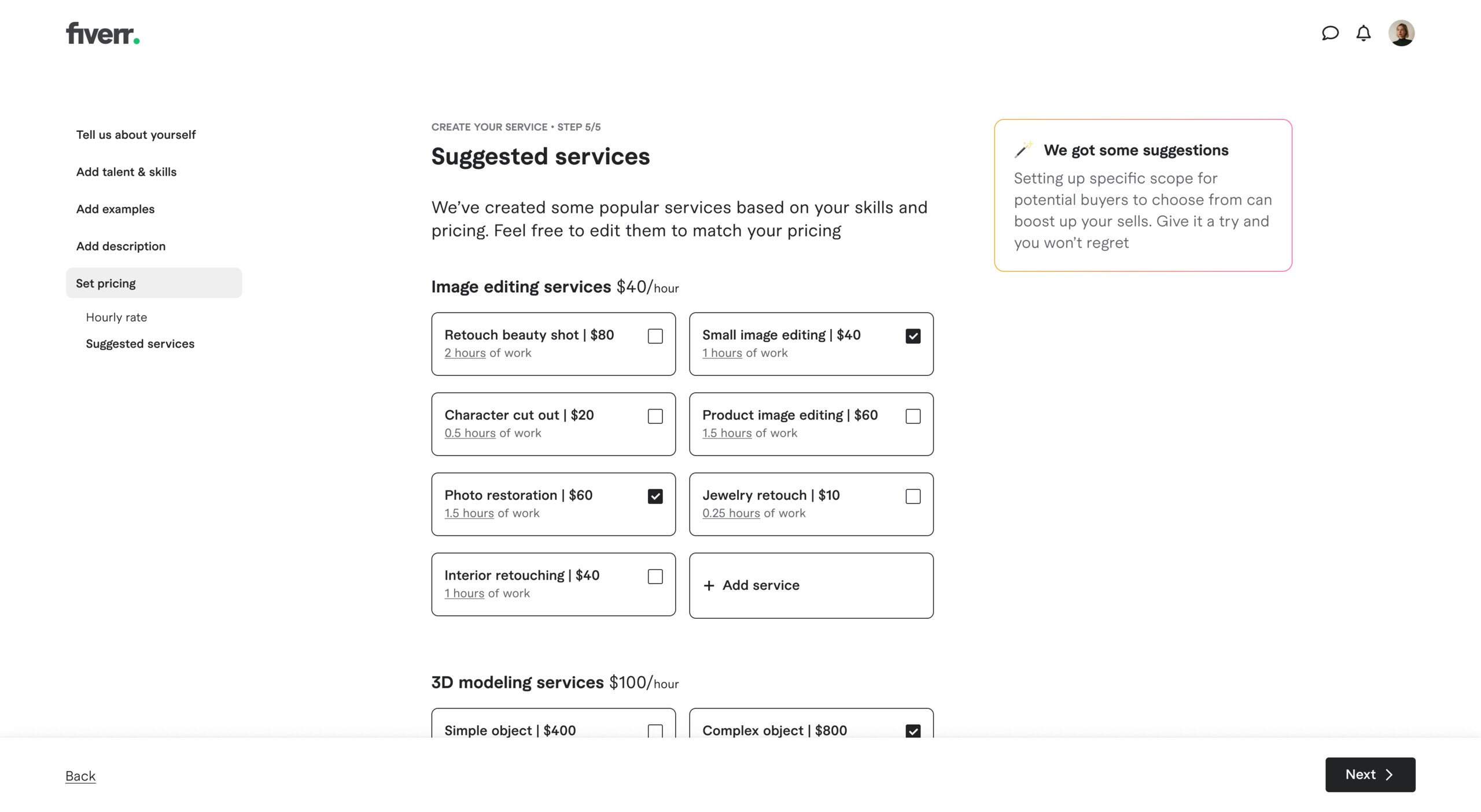
Step 6 — Fiverr suggests services. Based on your pricing and skill tags, Fiverr generates suggested service listings: “Retouch beauty shot — 2 hours — $80.” You review and tweak them. As you adjust — extending the estimated time here, raising the minimum there — Fiverr learns how you price your work, and future suggestions get more accurate.
The buyer side stays entirely familiar: they still browse services, see starting prices, and request custom offers for anything specific. The shift is entirely on the seller side, where setup goes from painstaking to fast.
Outcome
This was a concept — it never went into production. But it identified a genuine tension in how Fiverr’s gig model works for sellers at scale: the more capable and versatile a freelancer is, the worse the current model represents them. The Freelancer explored what it might look like to fix that — making it easy for sellers to show everything they can do, while keeping the buyer experience clean, transactional, and familiar.
It was one of a few concepts I explored around evolving Fiverr beyond its original gig model — a companion piece to Fiverr Business, which took a similar rethink to the buyer’s side.