Transportation
Bookaway
Mentoring, hiring, and building design culture across a multi-brand travel group.

Overview & Context
Bookaway is a transportation booking platform — buses, ferries, trains, transfers, and flights across destinations where getting from A to B is often the hardest part of a trip. It sits inside Travelier, a larger travel group with several brands under one roof, including 12Go, Platforma10, and Deonibus.
My engagement here was different from a typical project. It started in 2024 as a mentoring relationship with the designer already on the team, and grew from there — into hands-on product work, running the company’s design guild, leading hiring for the design team, and helping shape how the team adopts AI. Over time it became something closer to fractional design leadership: working across the full spectrum, from individual-contributor design through team-lead and director-level responsibilities.
Hands-on Design
Alongside the leadership work, I designed hands-on across the product, working with two product managers — one focused on search, the other on growth and the app.
A few of the projects:
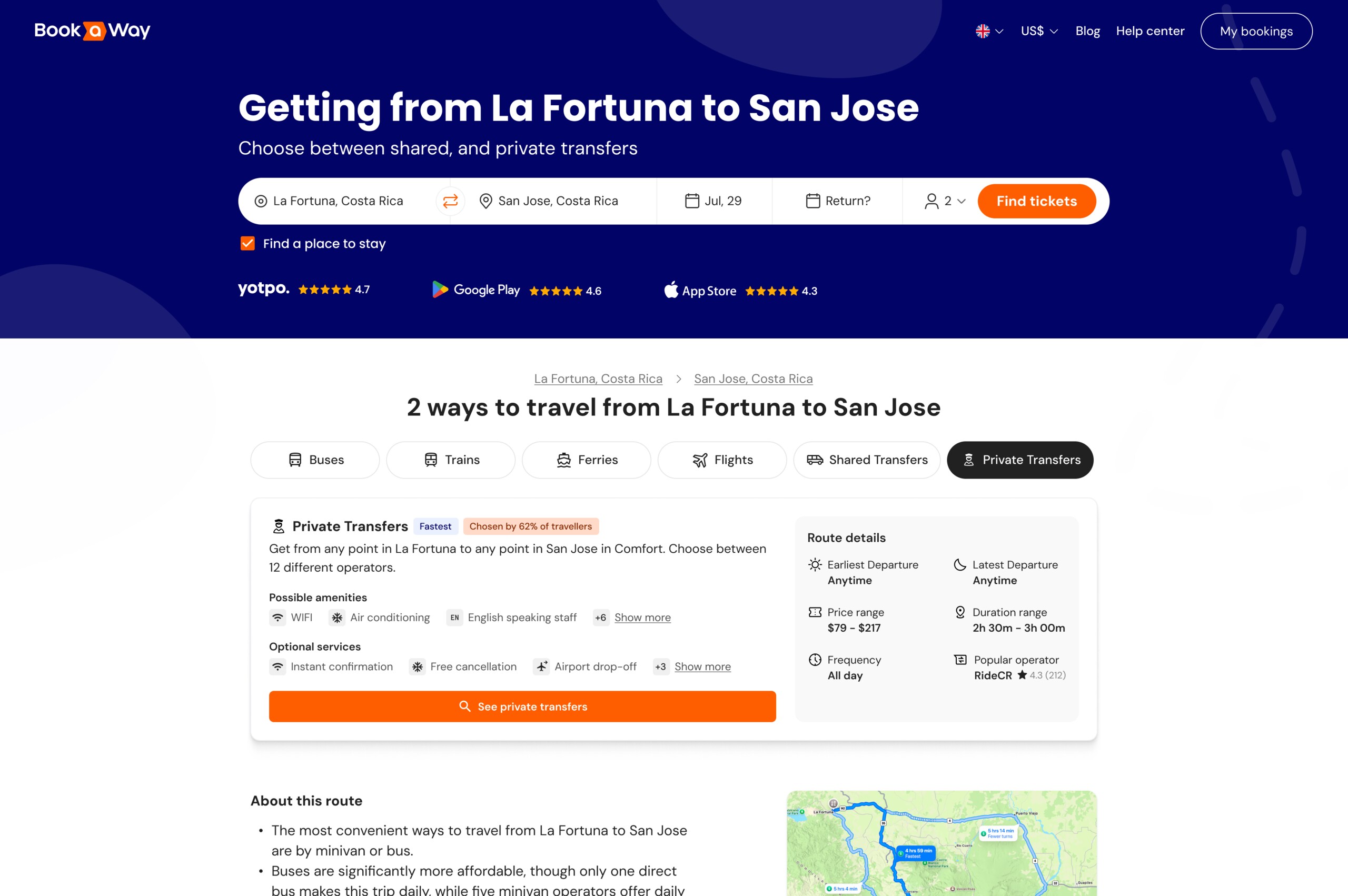
Search landing pages. Much of Bookaway’s traffic arrives from Google — someone searching “how to get from X to Y” lands directly on a route page. I redesigned these pages to make the decision easier at a glance: the available transportation types, what each costs, and how long each takes, presented so a traveler can weigh their options without hunting for the information.
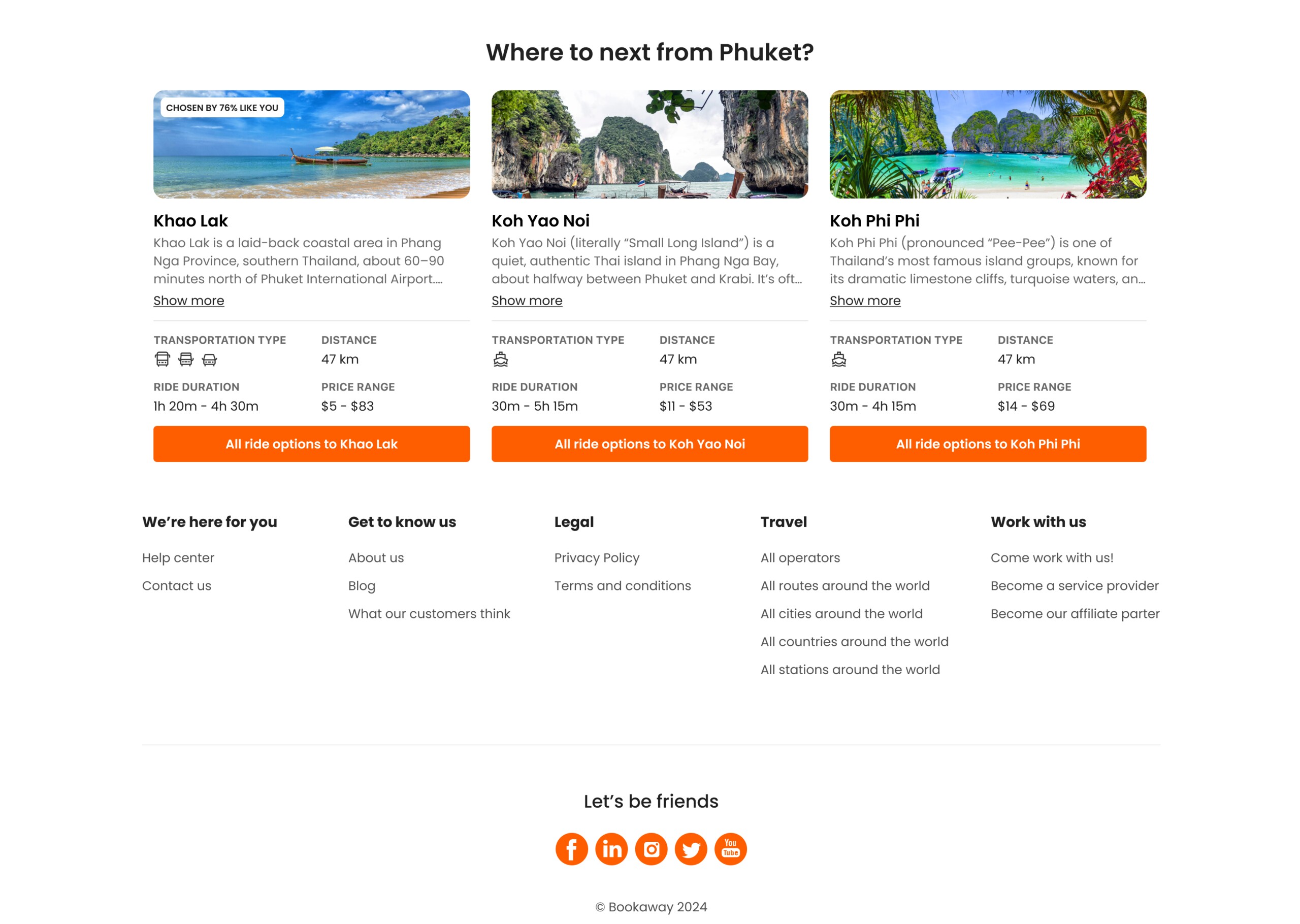
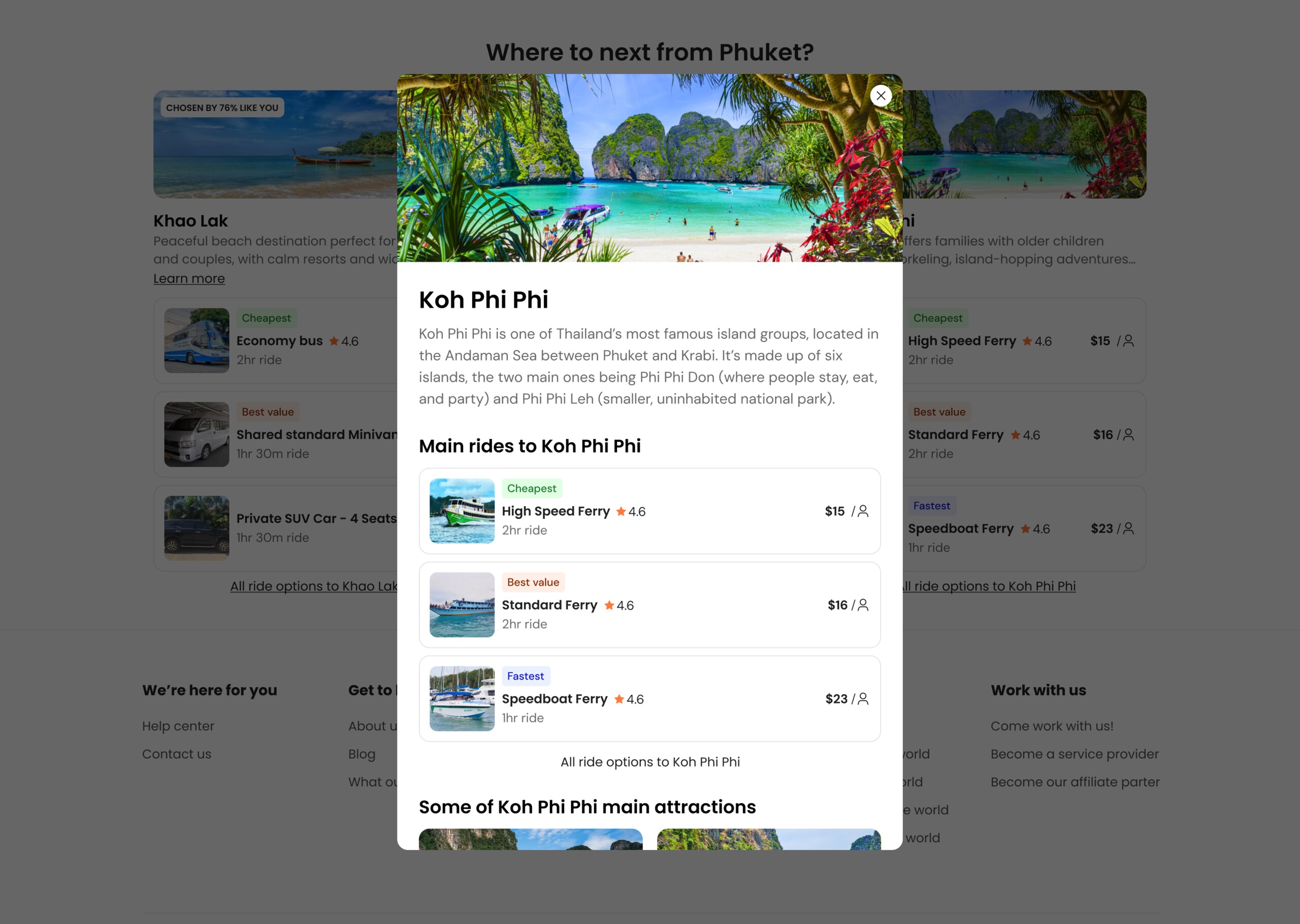
Where to Next. A post-booking feature: after payment, instead of a dead-end confirmation, travelers see a “thank you” that surfaces other destinations people have traveled to from there — turning the end of one booking into the start of the next.
Setting Direction — the Search Vision
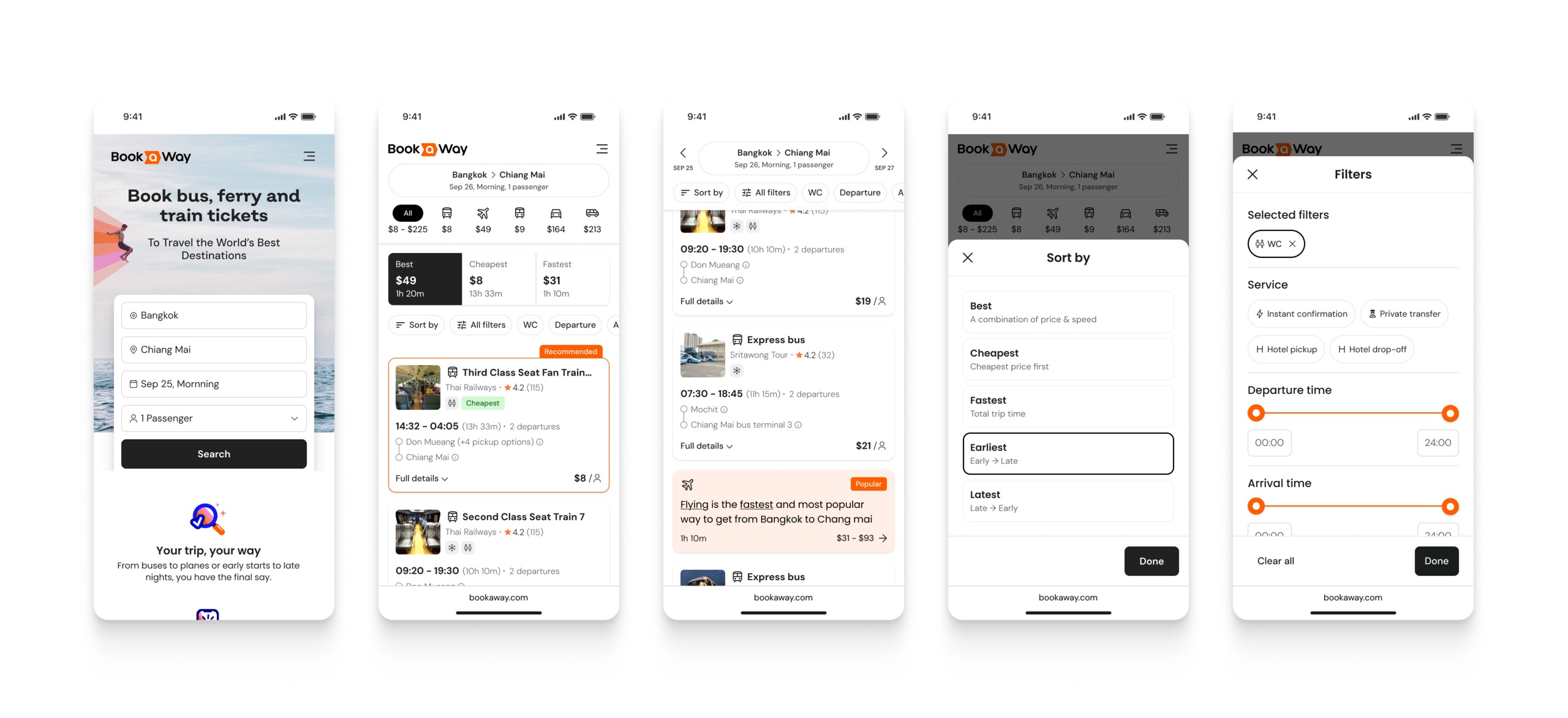
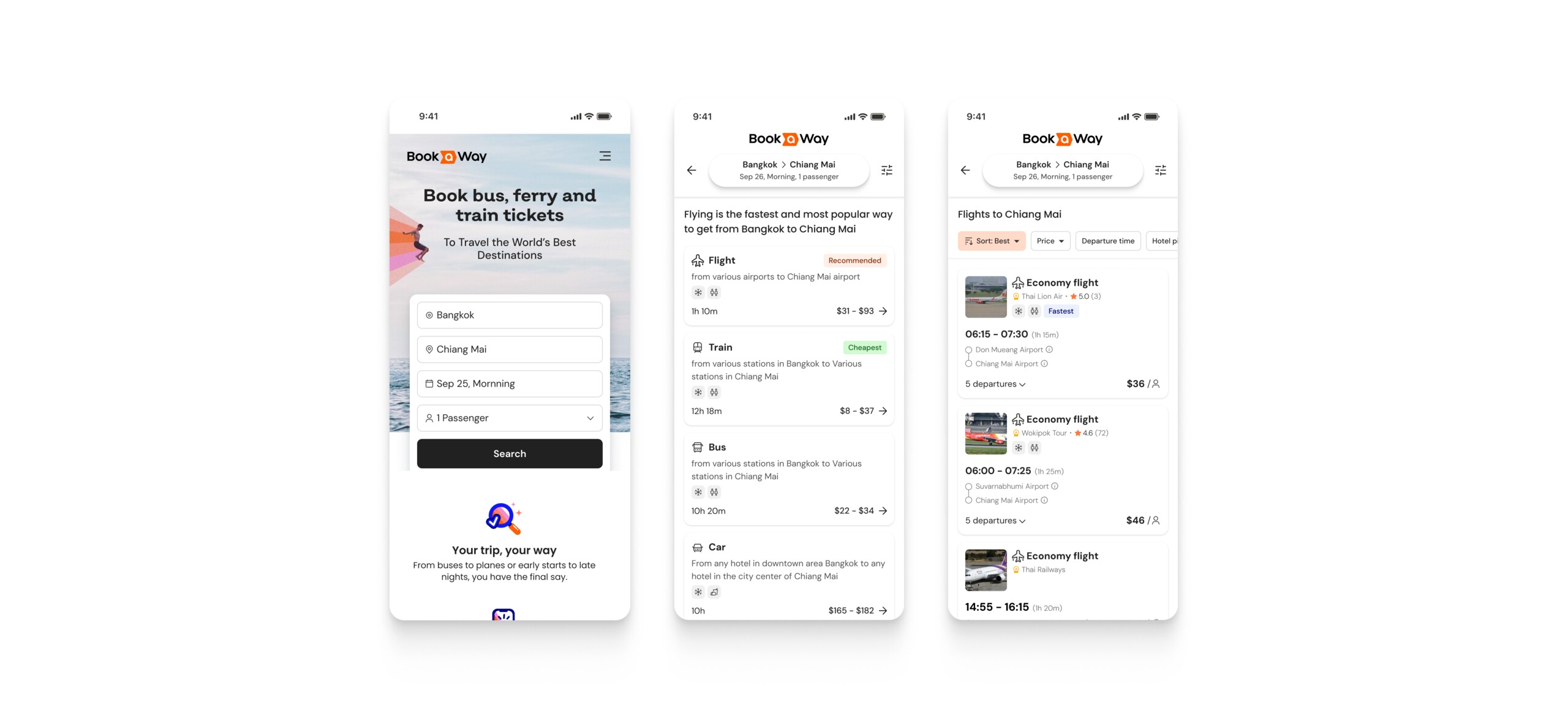
Bookaway’s search is where the hardest product thinking lives, because a traveler comparing transportation options is weighing several things at once: price, type of transport, total journey time, and departure frequency — a bus might run every half hour, while a route with flights may only have one or two departures a day. All of that has to be legible enough to make a confident choice quickly.
I created a vision for how the search results should work — a direction for surfacing those variables as simply as possible — which was then handed to a designer on the team to develop into a full-scope redesign. Setting the direction and handing it off for execution was itself part of the role: not designing every screen, but establishing the thinking the team builds on.
Mentoring
Mentoring was where the engagement began, and it stayed a constant throughout. Over the period I mentored two designers on the team, meeting weekly with each.
The conversations went well beyond craft. We worked on the things that actually determine whether a designer grows: how to collaborate with product managers, how to manage up to a non-designer manager, how to make the case for design decisions, and how to develop toward more senior responsibility over time. The focus shifted with each person — more growth-and-trajectory oriented with one, more focused on professional craft and cross-functional collaboration with the other — but the throughline was helping each of them become more effective and more senior in how they work.
Hiring
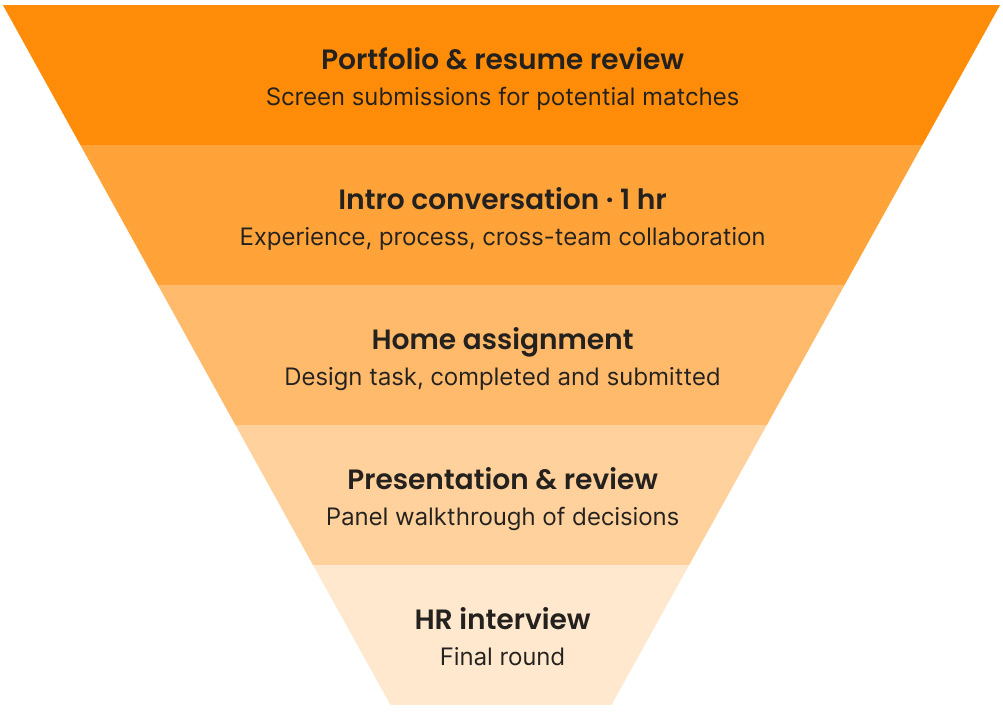
When the design team needed to grow, I led the hiring on the design side. I reviewed candidates’ portfolios and resumes, ran interviews, and owned the evaluation of the design assignment — going through each candidate’s work in depth to assess how they think, not just what they produce.
The home assignment itself was written by the VP Product; I reviewed and refined it, suggesting changes that were incorporated before it went out. Across the search, roughly half a dozen candidates were interviewed for the role.
The Design Guild
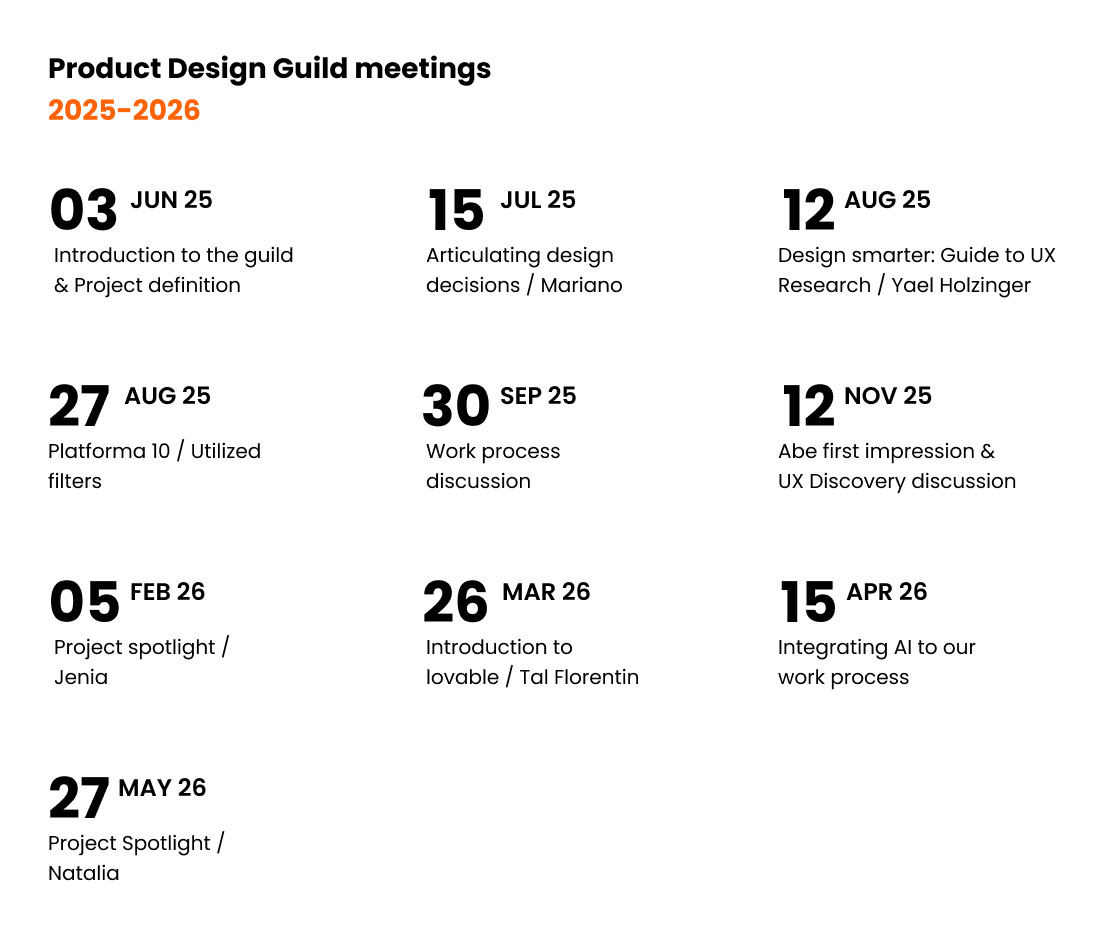
The guild was an initiative of the VP Product (now CPO), who wanted a way to bring the group’s designers together — to share knowledge, learn from each other, and raise the level of the craft across the brands. I built and ran it.
It brought together the ten designers and UX researchers across Travelier’s brands, meeting monthly for over a year. Each session was a chance to showcase work, exchange approaches, and occasionally bring in guest lecturers from outside the company. For a design team spread across multiple brands and products, the guild became the connective tissue — a regular place for a group that would otherwise rarely be in the same room to actually function as one design community.
Rethinking the Workflow with AI
The most strategic piece of the engagement was helping define how the design team should work with AI.
The premise was simple: developers are already building with AI, and designers need to work that way too — faster, and closer to the pace of engineering. But the real challenge isn’t speed, it’s speed without losing quality. AI makes it easy to move fast and quietly let the bar drop — to feel like something’s “basically done” and ship it, then discover the bugs and the mid-quality work later. The principle I anchored on was that each role has to remain the gatekeeper of its own area of expertise: AI accelerates the work, but the designer still owns the quality of what goes out.
The approach was collaborative rather than top-down. I worked with the product manager leading the initiative and a design leader from the group to gather the concerns, took those back to the design team to understand how they actually work with AI today and what they’d want it to do, then brought that input back into the discussion — turning it into a concrete set of requirements for how an AI-assisted design process should work.
One insight sat underneath all of it: none of this works without a solid design system. AI can only produce consistent, on-brand output if there’s a well-structured, well-maintained system for it to build against — and strengthening that foundation is the first real step. The plan is to get the design system into that shape, have the AI work fluently against it, and keep a designer in the loop to review — so the team moves faster without lowering the bar.
The direction and requirements are defined; implementation is the next phase.
Outcome
What began as a single mentoring relationship in 2024 grew into something spanning the full range of design work — hands-on product design, direction-setting, mentoring, hiring, running the design guild, and shaping the team’s approach to AI. It’s the engagement where my role stretched across the entire spectrum, from individual contributor to director-level, and it’s ongoing.
What I’d Do Differently
The guild worked, but it stayed a monthly gathering — a place to share work, not a system for it. In hindsight I’d have pushed to capture what came out of those sessions somewhere durable: a shared space for the patterns, critiques, and decisions that surfaced, so the knowledge outlived the meeting. A design community needs a memory, not just a meeting — and building that from the start would have compounded the value of every session.